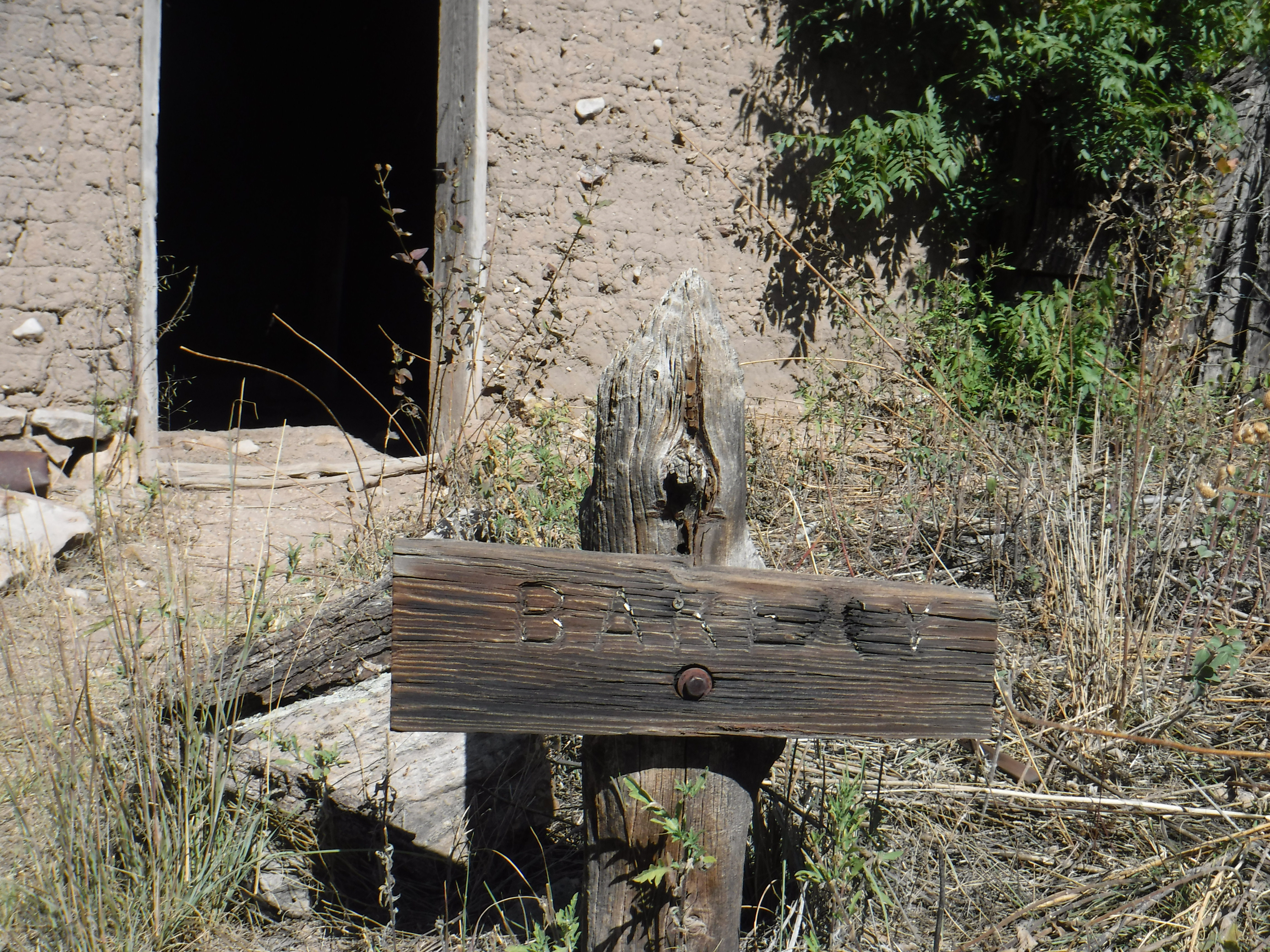
Sunday, October 29, 2023

Visiting Historic Camp Rucker, Cochise County, Arizona


Nestled in one of the most idyllic of locations - the Chiricahua Mountains of Cochise County - are the quiet ruins of one of the lesser-known Cavalry camps of Arizona Territory. It is a ghost fort of many names: Formally known as Camp John A. Rucker, and sometimes referred to as Fort Rucker, the site was originally known as Camp Supply (as were several other Cavalry camps) before being renamed Camp Powers. At first Camp Supply stood near a tributary of the White River, but it was relocated closer to the White River headwaters near the South Fork branch of the river. The original location was established on April 29, 1878, but by the time it was moved to the South Fork site, a double tragedy had occurred. A much-loved and respected officer, Lt. John A. Rucker, had drowned while attempting in vain to save his friend and fellow officer, Lt. Austin Henely, who'd been caught in the floodwaters of one of the desert's fierce summer monsoons on July 11, 1878. Both men had been West Point attendees, although only Henely had graduated from the academy. In honor of Rucker and the affection his men had for him, the camp was renamed in his honor, as was Rucker Canyon and the oft-dry Rucker Lake. 

Lt. John A. Rucker of the 12th Infantry

The little camp is, today, a serene gem far less known or trodden than Fort Bowie, its counterpart on the northern end of the Chiricahuas. Located near quiet campgrounds, it is accessed by taking E. Rucker Canyon Road east from US Highway 191 north of Elfrida. As you pass Devil's Canyon, you'll soon hit a fork in the road: Camp Rucker  Campgrounds are off the branch to the left, and the branch to the right is marked "N. Tex Canyon Road." That's the road that actually brings you to Camp Rucker itself. 


You'll likely be greeted by the local church ladies: fat Angus cows pastured adjacent to the ruins of the camp, watchful for ranchers bringing cake. Forge onward and you'll find the cavernous barn from the site's days as Old Camp Rucker Ranch, after it had been repurposed by area ranchers. (I will add a separate blog entry dealing solely with the camp's second life as a ranch, as it well deserves its own more-detailed treatment.)

Old Camp Rucker Ranch Barn

Surrounding the barn are oak trees, pine, and the stunning backdrop of the Chiricahua cliffs and outcroppings. This time of year - late October - the colors have just begun to turn. 


Beyond the barn is a surprisingly-well preserved adobe structure shaded by oak trees. The roof is new to preserve the building, but the walls are the original adobe. This was the Officers Quarters, likely built in the 1880s. 


The Officers Quarters


Unlike so many of Arizona's historic sites, the buildings at Camp Rucker are accessible: You can walk inside and admire the dappling of the sunlight through the porous rooftops, and sense the scale and feel of them. Inside the Officers Quarters is a surprisingly decorated ceiling, painted by one of the ranch wives after a marital occupation replaced the martial occupation.

Arizona Sistine: The Painted Ceilings of the One-Time Officers Quarters


Beyond the Officers Quarters, to the northwest, stands another well-preserved adobe. Adobe, formed of mud amended with straw and other organic matter, is susceptible to the ravages of wind and rain unless coated with a protective stucco surface. The adobe buildings at Camp Rucker remain uncoated, which offers a good opportunity to see the native material - but will ultimately result in their return to the soil from whence they were created. This adobe building was the camp bakery. 

Camp Rucker Bakery

Inside the bakery is the outline of the oven, a ghost hearth of sorts, reminiscent of the large medieval hearths that both warmed homes and provided cook space. 


Outline of the oven at the Camp Rucker Bakery


The roof and ceiling of the bakery have not been replaced with steel, and still feature the original wood shake shingles; the sunlight (and, on less perfect days, the rain) comes in easily. The sunlight today dropped like so many stars on the walls and floor in a dazzling feat of natural beauty. 


Yards from the bakery are the haunting remains of the original Commissary. The foundation and one corner of the walls are all that remain, a mournful footprint, since the building burned in 1921. 


The final building you will find at the old camp / ranch site is the ranch house of those who followed the military - the Hampes, the Raks, and Mrs. Dana - and despite the toll the years and elements have taken, you can still imagine the cozy loveliness of it. Again, I'll go into the ranch owners separately, but include a couple of photos here in keeping with the "as it stands" theme.


Again, we're fortunate to be able to walk through these doors, just as the ranchers did, and see the view through the windows they once looked from. The ranch house was reinforced by the adobe bricks salvaged from the ruins of the Commissary, used to fortify the occupants from the cold winters in the mountains.

 Although it is a weekend, we encountered only one other group of visitors during our time at Rucker today; a family on foot from the nearby campgrounds. Even the children toted rifles; it is hunting season, after all.

Never tiring of the vast vistas as you drop down from the mountains, we opted to leave via Tex Canyon Road east to US Highway 80, a sixteen-mile trek on dirt roads. Despite the warning about risking tire damage posted as we embarked, the road was easily passable - rough in spots with loose rocks, but otherwise in fine shape. I'm not sure I'd want to take it during a monsoon, but other than the knuckleheads who set camp ON the road itself, it was an easy route that brought us onto the road to either Douglas or Apache. Below are photos of selected parts of Tex Canyon Road as you enter the San Simon Valley and back onto paved roads.


If you go: Take water and weather-appropriate clothing, including a jacket, in case of emergency. There are no facilities at Camp Rucker or along the road to Hwy 80, and you will not have reliable cell phone service or Onstar. There is, however, a ranger station and campground on Rucker Canyon Road north and west of Camp Rucker historic site; to access it, backtrack along Tex Canyon Road and proceed north. 

Copyright (c) 2023 Marcy J. Miller * All rights reserved * No part of this content, including photographs, may be shared without the express written permission of the author * Sharing the links to this page, however, would be greatly appreciated * Thank you for stopping by!

Thursday, August 24, 2023

Lunch Trip to Patagonia's Velvet Elvis


Pizza, that most essential token of affection from the oft-hostile universe, is hard to come by in my area. Good pizza, that is. The soulless chain outlets provide what can only be described as Bowling Alley Pizza; the pre-made offerings at local saloons and cafes are dismal offerings that, should they be offered in sacrifice to the Pagan Pizza Gods, would only result in the vengeful end of humankind. The occasional standout offers good pizza, but without much charm. But drive out a bit further, past the vineyards of Sonoita and Elgin, and to the perfectly adorable hamlet of Patagonia, and you will find truly great pizza and ambience to match.


Housed in its new location in a restored 1915 saloon called the Big Steer, Velvet Elvis has larger quarters now made to resemble a peaceful mission. These adobe walls were once crumbling, but have, Phoenix-like, risen from the dust. Within, the restaurant pays homage to art, the triumph of good over evil, South American culture, Frida Kahlo, the archangel Michael, snakes, jaguars, and tropical plants - and it all blends seamlessly into a serene and joyful place to grab tapas, a margarita, or ... most importantly ... damned fine pizza.

A portion of the mural depicting a South American Eden, complete with snake, and a chieftain I assume to be Moctezuma. Other parts of the mural, which graces the barroom, include jaguars, toucans, and the Tree of Life.


While enjoying your meal, absorb the good-over-evil icons: Archangel Michael slaying a goblin; an armored Archangel Michael carved of wood in larger-than-life scale, wielding a staff of vengeance; cherubs and Marian images gracing the walls; the mission-like vaulted ceiling; candles of offering; and an elaborately-painted vast snake that coils at the ceiling-wall juncture around the entirety of the dining room. 

Study of the carved Archangel Michael.


And there are other heroes, prominently displayed, as well: Frida Kahlo appears repeatedly, alongside butterflies or small tropical monkeys. Above the gorgeous wood-grain of the bar back hang paintings of Sugar Ray Leonard and John Wayne to each side and, front and center, the restaurant's namesake: a Velvet Elvis. As a child, visiting Nogales just across the border, I remember entire shops devoted to velvet paintings: Mustangs running out of the very fabric; dogs playing poker; Marilyn Monroe; and .... of course, Elvis.


But back to the pizza. The menu offers a variety of "Designer Pizzas," with sumptuous southwestern-influenced ingredients from cilantro to jalapeños. For the gluten-avoidant, the smaller pizzas can be made with almond flour. To satisfy my months-long craving, though, I needed a classic: a large mushroom pepperoni. It was exactly as pizza should be: a crust doughy and fresh, tomato sauce where you can taste the sweetness of the tomatoes themselves, and a wonderfully gooey cheese, applied liberally. It was the answer to my lengthy search, covering literally hundreds of miles across southeastern Arizona, and truly the stuff of pizza dreams.


Filling myself on outstanding pizza, watched over by blue-lit cherubs and the Virgin Mary, and partaking in excellent conversation with a friend too-seldom seen, made for the perfect afternoon.


A few doors down we stopped in at the Patagonia Trading Post, a shop filled with treasures crafted by local and international artisans and books of local interest and - best of all! - a shop cat named Oreo. 


Oreo's favorite hiding places - Saguaro-shaped cat beds; cat baskets; other fluffy nooks - fit in almost indiscernibly on the shelves filled with candles, artwork, hand-felted toys, and objets d'art too vast and variable to recall. Here, a rack of native plant seeds, beautifully packaged; feet away, a comfy cat bed. 


Oreo, shop cat, on the job.

Armed with books and (amazingly) resisting the temptation of so many other goodies, my friend and I moved on. As we'd driven to Patagonia, another place called out to me: The Meading Room outside of Sonoita. Vineyards and wine-tasting outlets grace the serene foothills throughout the area, but mead? My familiarity and attraction to mead has largely been a literary and historical one; from meads mentioned in Chaucer to the meads of Medieval history, I'm aware of their lengthy place in the world of fermented spirits, but I've never tasted the stuff. Unlike wine, which relies on fermented grapes, mead is a fermented honey beverage. 


The Meading Room is a play on words for the mead hand-crafted onsite as well as the corner of the mead room lined with bookshelves and featuring cozy chairs where a weary traveler can take a break, sip a cider or a mead, and read until restored - or meet (mead!) with friends. The mead room also offers shelves of tasteful artsy gifts and souvenirs, from T-shirts and watercolor dots to, well, mead. 


I tasted three varieties of the many offerings at the Meading Room; first, a lavender and pear offering; next, a ginger bubbling variety called Ziggy's; and finally, a new offering that isn't yet bottled (waiting on labels to be printed) but is available behind the bar. The lavender used in the products at the Meading Room is grown on-site, along with other herbs in an immaculate, picture-perfect garden outside the building. As a sucker for anything ginger, though, I left with a bottle of Ziggy's. 


Note the alcohol content on the label: 8.5%. Mead is notable for its high ABV. The stronger the honey flavor in standard ("sack") meads, the higher the alcohol content. There are lower-ABV meads and "seltzer" meads, but if I'm going to go for the closet thing to original, I'm going to go for the standard. It'll be the perfect accompaniment for revisiting Beowulf and the Canterbury Tales. 

On the rolling hills behind the Meading Room, antelope watched us come and go. 


Antelope sentinels under storm clouds behind The Meading Room.


Pizza, mead, antelope, local art, visiting locally-owned places that are clearly passion projects, and driving historically-rich and visually-stunning roads ... no better way to spend an afternoon. If you go, here are some helpful links:

Velvet Elvis: https://www.velvetelvislamision.com/

The Meading Room: https://www.themeadingroom.com/

Enjoy your visit (and the cooler climate than Tucson or Phoenix!) and don't forget to give scritches to Oreo!


Copyright (c) 2023 Marcy J. Miller * All rights reserved * No part of this content, including photographs, may be used without the express permission of the author * Links, however, may be freely shared and are greatly appreciated * Thank you for stopping by!


Sunday, August 6, 2023

Journey to Rucker Lake

 It's too hot to ride, too hot to drive T-posts - so what better day for a refreshing trip to Rucker Lake, just over an hour's drive away? 


So, after a leisurely breakfast at Sandy's Cafe in Sunizona, we turned onto Rucker Canyon Road at the Border Patrol checkpoint and headed east. We'd already passed the orchards, the grain bins, the fields of towering corn north of Elfrida. 


Once we hit Rucker Canyon Road, the landscape began to shift back to rolling hills as we climbed out of the valley. Although we're full-on monsoon season right now, it's been a disappointing "Nonsoon" so far, and it's a parched land - but we hit water in a few creek crossings. 


Tree-lined verdant dirt roads shaded us, but the creek bed beneath this cool wooden bridge was dry. 


As we neared the canyon, the rock formations in this once-home of the Chiricahua Apache people began to resemble the famous spires of the Chiricahua Mountains. 


It was at Rucker Canyon on the White River that Lieutenant John "Tony" Rucker died on July 11, 1879 attempting to save his friend, Lieutenant Austin Henely, who was already in peril in the treacherous waters. Both men drowned; their bodies were recovered and returned to Fort Bowie, where they were interred (later to be moved back east). Camp Rucker, a temporary camp off of what is now Tex Canyon Road, was renamed to honor the popular Lt. Rucker, as is the canyon itself. 

The waters didn't rage today, though. The river bed was barely damp enough to breed mosquitos. 


The air, though, was pure and invigorating, the breeze carrying the fragrance of the juniper that shared the land with Emory oak, an occasional birch, and piñon. 


And then we were there: Rucker Lake! I was eager to slip my shoes off and wade into some cooling waters. It has been years since I've seen a lake. Desert people crave pools of water in ways normies might never understand. We parked at a pullout, not another soul to be seen ... and I hopped out of the car, camera in hand.


And there it is, in all its glory, in the two photos above: RUCKER LAKE! A small lake bed, surrounded by breathtaking views .... and utterly, devastatingly dry. Suffice it to say the fish were not biting. 

I feasted on the fragrant air, sipped from my bottle of ice water, and figured I'd just come back when we actually get some rain. The drive was beautiful. The scenery, exquisite. The area history, rich and tragic. And the lake ... a mirage. 


Above: Me, noticeably NOT dipping toes in lake water. 


If you go: Take Hwy 191 to Rucker Canyon Road (north of Elfrida); head east. Stay on the main road. The road dead-ends at a roadblock not far north of the lake bed, but there are hiking trails, camp sites (fees required), and plenty of parking pull-outs. Today is Sunday, and we saw one occupied campsite and one other vehicle near the canyon, so expect isolation and carry emergency water. The campgrounds feature bathroom facilities. During a normal monsoon season, expect arroyos and washes to run; don't cross flooded crossings. You wouldn't want a canyon to be named after you.


Copyright (c) 2023 MJ Miller * All rights reserved * No part of this content may be reproduced without the express permission of the author * Thank you for visiting and sharing links, though!